
The Dominican Republic, often shortened to “the DR,” shares the island of Hispaniola with Haiti. The DR occupies two-thirds of this island, which, along with Saint Martin, is one of just two in the Caribbean that are shared by two sovereign nations. It is within the Greater Antilles, a series of islands in the Caribbean Sea.
The Dominican Republic should not be confused with Dominica, an island country in the Lesser Antilles, located right between Puerto Rico and Trinidad and Tobago. The Dominican Republic has a maritime boundary with Puerto Rico to the east and a land boundary with Haiti to the west.
Most Dominicans consider themselves to be of mixed race, which includes individuals who identify as mestizo or Indio and mulatto. A lesser fraction of Dominicans identify as black, while an even smaller part identifies as white. There are also minority groups in the Dominican Republic, including those of Middle Eastern and Asian descent.
The country’s name comes from Saint Dominic, the founder of the Dominican Order, who is also the patron saint of astronomers and the falsely accused. The Dominican Order founded the oldest university in the New World – the Universidad Autónoma de Santo Domingo, located in Santo Domingo, the DR’s capital.
The most notable cultural influences on Dominican cuisine, family dynamics, religion, and music are European, African, and Taíno. Some Dominicans still speak a form of African-rooted creole – especially in Samaná, where descendants of freed African-Americans settled in the 1800s.
Dominicans love to dance to bachata and merengue. Warm and welcoming, these folks have a fantastic sense of humor and are great storytellers. You’ll rarely meet a Dominican who isn’t ready to dance, talk, or tell a joke.
• FUN READ: 15 Funny Dominican Jokes That Will Make You Laugh
With about 1,000 miles of coastline, Dominican Republic has stunning beaches for every vibe — surfing in Cabarete, calm waters in Bayahibe, luxury in Punta Cana. It also boasts charming cities and diverse landscapes, as well as a vibrant food scene and some of the finest rums in the world. No wonder it is one of the most visited countries in the Caribbean, with more than 10 million tourists visiting annually.
Read on to find out more fun facts about the Dominican Republic.
15 Fun Facts About the Dominican Republic
1. The Dominican Republic was the site of the first European settlement in the Americas
Santo Domingo, established in 1496, is the oldest city in the New World that has been continuously inhabited.
2. It is also home to the first cathedral in the Americas
The Cathedral of Santa María la Menor, which is dedicated to St. Mary of the Incarnation, is the oldest cathedral still standing in the Americas. It was started in 1504 and finished in 1550, making it the second cathedral ever built, following Greenland’s Garðar Cathedral Ruins.
The Cathedral of Santa María la Menor is in the Colonial Zone of Santo Domingo, which is a UNESCO World Heritage Site. A must-visit when in the Dominican Republic!
3. The D.R. flag is the only one with a Bible on it

The flag of the Dominican Republic uniquely features a Bible that’s located at the center of the national coat of arms. The Bible is opened to John 8:32, which reads: “Y la verdad os hará libres” (“And the truth shall make you free”).
4. Dominicans are fiercely proud of this flag and the national anthem
It’s typical to see the Dominican flag hoisted in every town square in the DR and hear school kids loudly singing their anthem, which is unofficially known as “Quisqueyanos valientes” (“Valiant Sons of Quisqueya” – Quisqueya being a moniker used for the Dominican Republic in modern times).
5. The national dish is even called “La Bandera” or The Flag!

This colorful dish is made with white rice, red beans, and stewed meat that can either be chicken, pork, or beef – plus salad. The colors match those of the national flag.
6. The Dominican Republic is the birthplace of both merengue and bachata
Merengue and bachata are globally popular music styles that are closely connected to the identity of the Dominican Republic.
7. Baseball is practically a religion in the Dominican Republic
The country has produced more MLB players than any other country outside the United States. Apart from five Hall of Fame players – Juan Marichal, Pedro Martinez, Vladimir Guerrero, David “Big Papi” Ortiz, and Adrian Beltre – the Dominican Republic is home to numerous All-Stars, award recipients, and lasting contributors to baseball.
8. “Dominican time” is a real thing
The expression essentially means “not always on time.” In the Dominican Republic, being over 30 minutes late is often culturally acceptable — it’s more about vibe than punctuality.
9. Many rural homes are still built in bright pastels
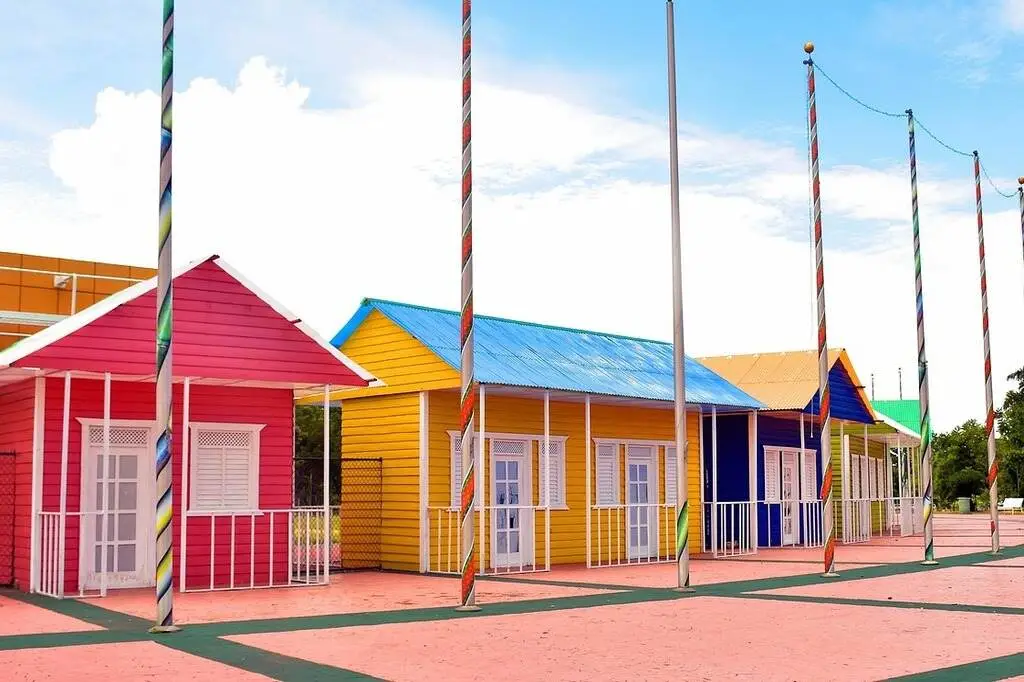
It’s a tradition that makes entire towns resemble storybooks. These vividly painted rural homes are often found in Samaná, as well as the village of Pueblo de los Pescadores in Las Terrenas. They are also present in other regions of the country, such as Puerto Plata, where the Paseo de Doña Blanca is very popular among photographers.
10. Colmados are the beating heart of community neighborhoods
Colmados are small convenience outlets where one goes to purchase groceries, enjoy a drink, and socialize. Basically, a colmado combines elements of a quaint grocery store and a bar. It provides all the basic daily necessities and offers an excellent spot for hanging out.
11. Motoconchos are a daily part of life
Motoconchos are motorcycle taxis favored by locals in major cities like Santo Domingo and Puerto Plata, as well as in Jarabacoa, thanks to their affordability and speed in navigating through traffic. However, this mode of transportation may be a little terrifying for tourists, especially in urban areas or regions with high traffic congestion.
12. The Dominican Republic has “Limping Devils”

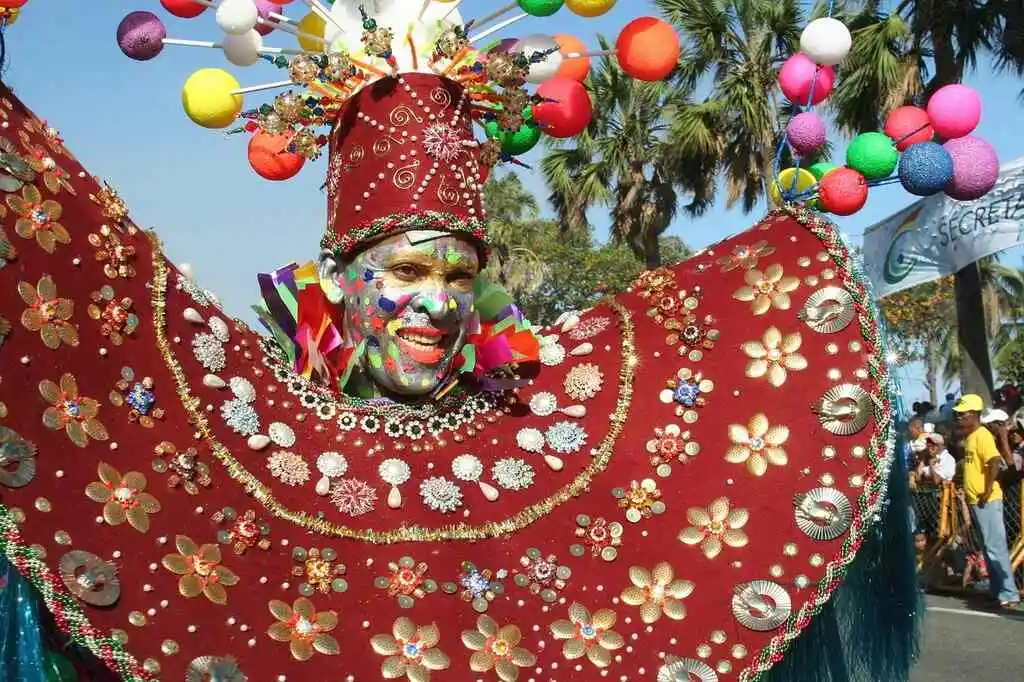
The Dominican Republic is unique among countries for having its own Carnival characters, such as Diablo Cojuelo (“Limping Devil”) – a figure that blends Hispanic traditions and African influences. He is a masked figure with a whip, sleigh bells, and eye-catching costumes.
During the Carnival season in the D.R. (around February 27th, the Independence Day), Diablo Cojuelos parade through the streets of La Vega, chasing and playfully hitting people with inflated cow bladders called “vejigas.”
• ALSO READ: 10 Iconic Symbols of the Dominican Republic
13. Mangú is more than food — it’s culture
This dish is made from mashed plantains, typically eaten during breakfast but can be enjoyed throughout the day. It is often accompanied by eggs, cheese, and sausage.
Mangú is a staple and represents the national identity of the Dominican Republic.
14. The rare blue gemstone called Larimar is only found in the Dominican Republic

Frequently used in local jewelry, the Larimar gemstone is named after the sea and the daughter of Miguel Méndez, who discovered the stone. The name blends the daughter’s name – Larissa – with “mar,” which is the Spanish term for “sea.” Méndez chose this name due to its captivating blue hue, which he connected to the Caribbean Sea.
Larimar’s stunning blue hues vary from light blue to rich turquoise, often featuring marbling or white patches that mimic sea foam. Every piece of this gemstone is one-of-a-kind, with unique patterns and color variations – which means no two stones are the same.
15. The Dominican Republic is a geographically diverse nation
The DR boasts diverse terrains, ranging from deserts to mountain forests in the central highlands.
Lake Enriquillo, the largest lake and lowest point in the Caribbean, and the tallest mountain peak called Pico Duarte are found in the DR. The watershed of Lake Enriquillo spans an area of 3,500 km², with the lake’s surface sitting 46 m below sea level. It has an estimated average depth of 6.10 m — with crocodiles! In contrast, Pico Duarte rises to a height of 3,101 m (10,174 ft), making Hispaniola the island with the 16th-highest elevation in the world.
The Dunes of Baní (Dunas de Baní) are the only genuine desert in the Dominican Republic and the largest in the Caribbean. They’re on the Las Calderas Peninsula, featuring a distinctive desert scenery complete with sand dunes, cacti, and various types of vegetation. These dunes are a tourists’ favorite, particularly those looking to experience a contrasting aspect of the Dominican Republic.
There’s also a real-life cave of wonders called “Cueva de las Maravillas” found in the south. It’s full of ancient Taíno art and underground beauty – an absolute must-visit!
Booking.com



Such a fascinating website! The content is both informative and super engaging. I love how catchy everything is! 🤗